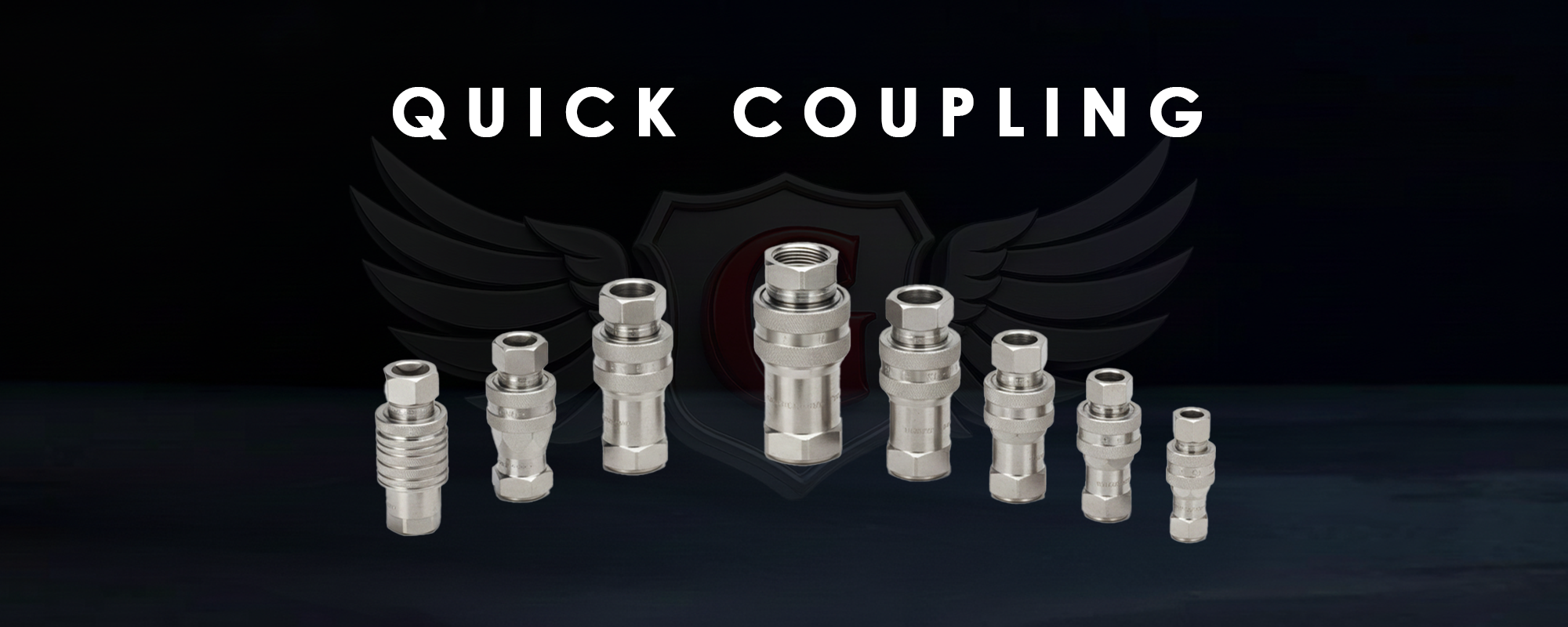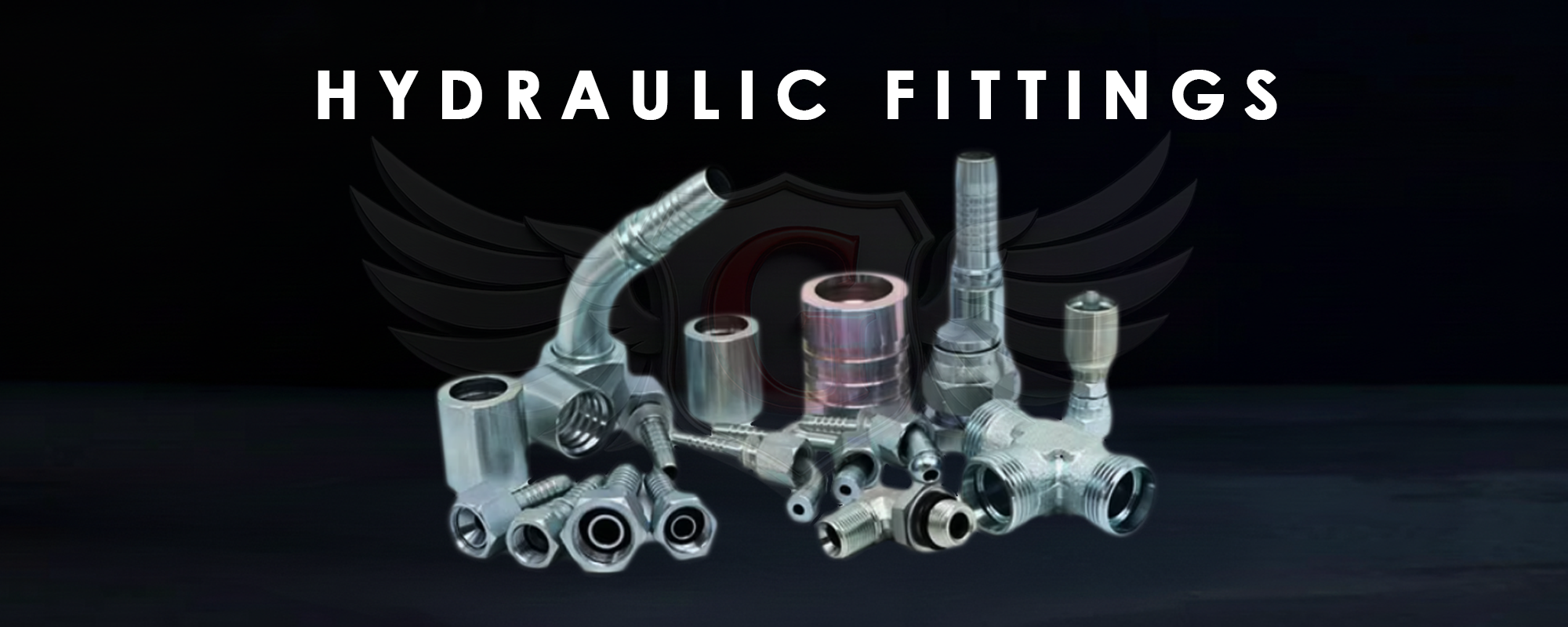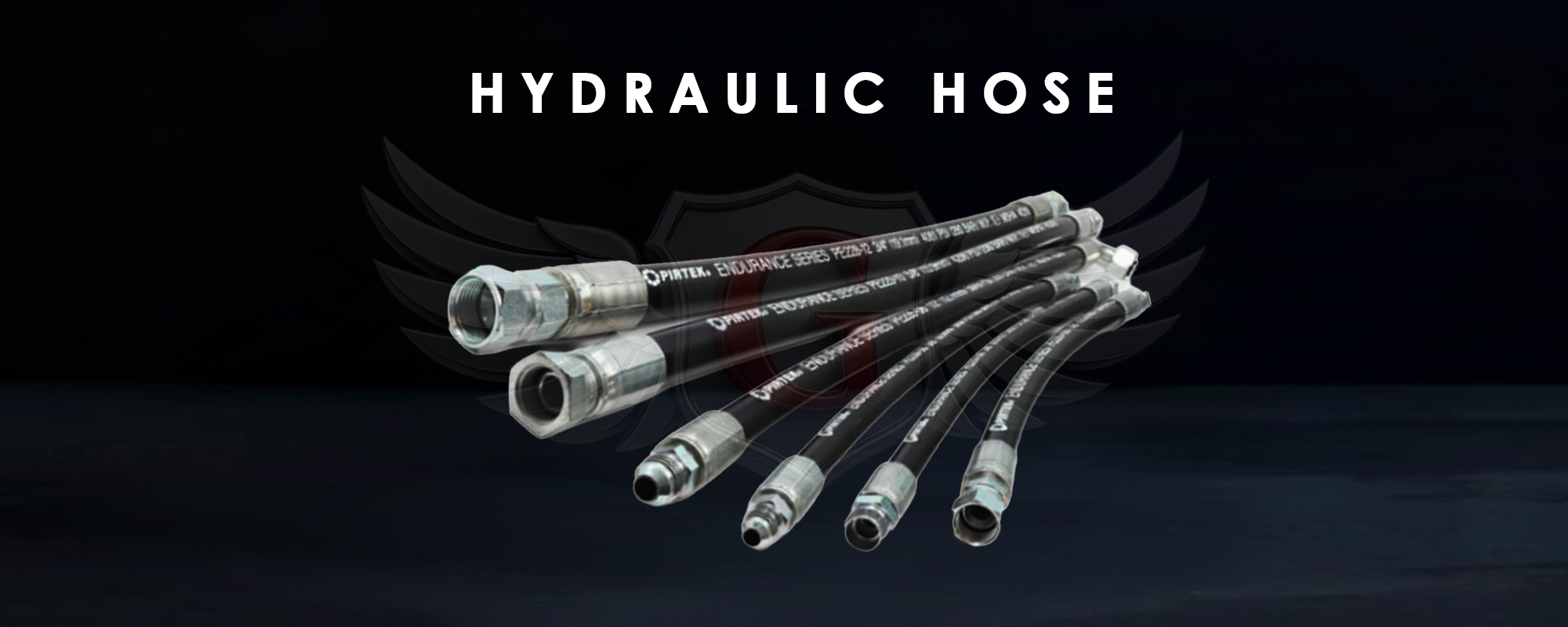


Hydraulic fittings are the critical link in a high-pressure fluid power system. Unlike standard pipe fittings, they are engineered to be **permanently crimped** onto a hydraulic hose, creating a secure, leak-proof assembly capable of withstanding extreme pressures (up to 10,000 PSI).
The challenge with hydraulic fittings is that there are many different global standards (JIC, BSP, ORFS, DIN) that are **not interchangeable**. This guide from Glory Engineering Supplies is a technical reference to help you identify and select the correct fitting, material (**Carbon Steel** or **Stainless Steel 316**), and thread type for your application.
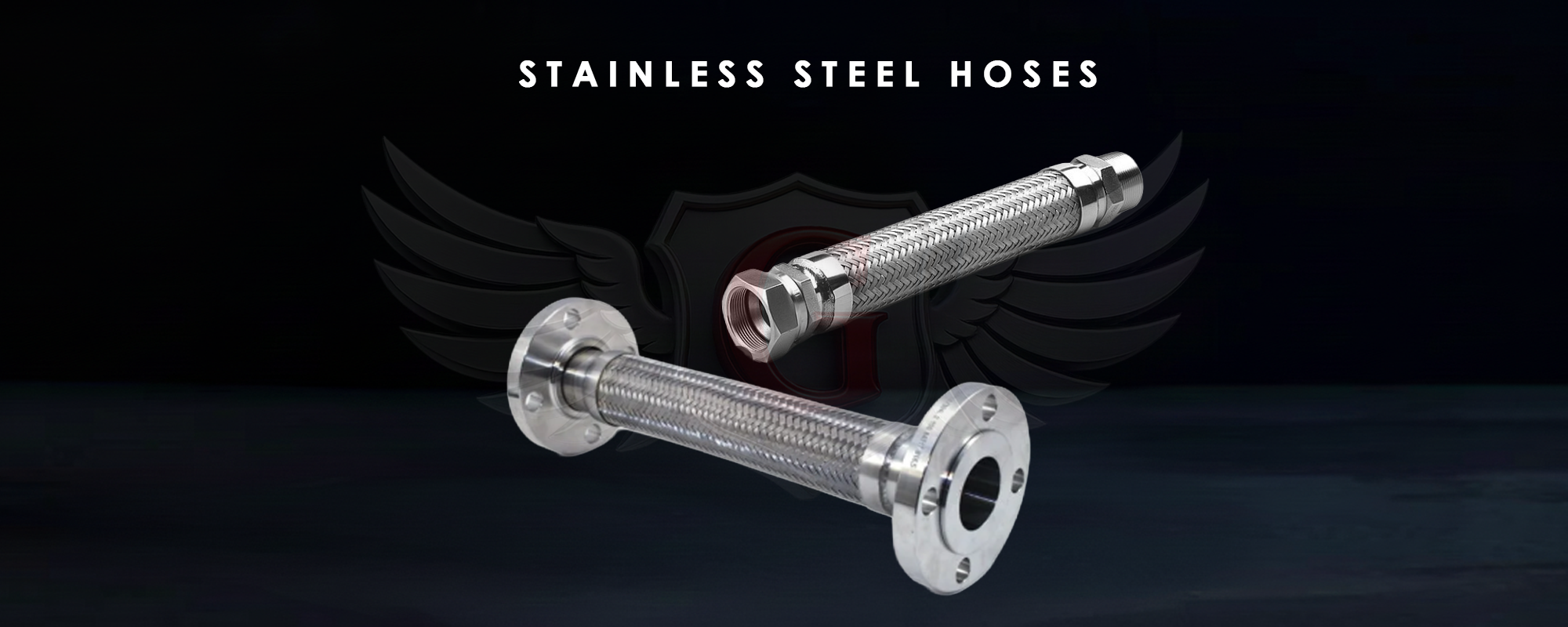
We stock a full inventory in both standard Plated Carbon Steel for durability and Stainless Steel 316L for superior corrosion resistance in chemical or marine applications.
Our inventory covers all major global standards, including JIC (37°), BSP (60°), ORFS (Face Seal), DIN (24°), and NPT, in all common sizes.
A fitting is only as good as its crimp. Our workshop provides expert, factory-spec crimping for safe, reliable, and leak-free hose assemblies.
Can't identify a thread? Our technical team has the gauges and expertise to match any fitting, ensuring you get the right part the first time.
The most important part of identifying a hydraulic fitting is its **sealing method**.
Very common (American standard). Seals on a 37-degree metal-to-metal flare. (SAE J514)

British standard, common globally. Seals on a 60-degree metal-to-metal cone.

Excellent, vibration-resistant seal. Seals with a soft O-ring in a groove on the flat face. (SAE J1453)

German/Metric standard. Seals on a 24-degree cone, often with an O-ring (Light 'L' and Heavy 'S' series).

Used for large, high-pressure hoses (1" and up). A 4-bolt flange seals with an O-ring against a flange head.

Used to connect two hose assemblies or as a bulkhead fitting to pass through a panel.
Use this table to identify the key standards. **Never mix standards.**
| Standard | Sealing Method | Thread Type | Visual ID |
|---|---|---|---|
| JIC (SAE J514) | 37° Metal-to-Metal Cone | Tapered (UNF) | Smooth, sharp 37° cone on the male end. |
| BSP (BSPP) | 60° Metal-to-Metal Cone | Parallel (BSPP) | Wider 60° cone. Female swivel is very common. |
| ORFS (SAE J1453) | O-Ring on Flat Face | Parallel (UNF) | Completely flat face with a visible O-ring groove. |
| DIN (24° Cone) | 24° Metal Cone (or with O-Ring) | Metric | Very narrow 24° cone. Often has a "Light" or "Heavy" series body. |
| NPT | On the Threads | Tapered (NPT) | Threads are visibly tapered. Less common for modern hydraulics. |
A hydraulic assembly is a critical safety component. Never compromise.
No. Absolutely not. Crimped fittings are "one-time use." The ferrule (the outer shell) is permanently deformed onto the hose. It cannot be safely removed or reused. The entire assembly must be cut off and replaced with new fittings.
They are visually identical and both use a 37° flare. However, **AN (Army-Navy)** fittings have a higher thread tolerance (UNJ thread) and are used in military and aerospace. **JIC (SAE J514)** is the industrial standard. While they can sometimes thread together, it is not recommended for high-pressure systems.
No. The thread pitch, diameter, and (most importantly) the sealing cone angles (37° vs 60°) are completely different. They will not seal and you will damage the fittings, creating a dangerous leak.
ORFS is a superior seal. It seals on a soft O-ring, making it extremely resistant to leaks caused by high pressure and vibration. A JIC (metal-to-metal) seal can be more easily damaged or loosened by vibration. ORFS is the modern standard for high-vibration equipment (e.g., excavators).
From a single replacement hose to outfitting your entire machine, we have the SS 316 and Carbon Steel fittings in stock. Contact our technical team today for a fast, safe, and reliable assembly.
Request a Quote Now