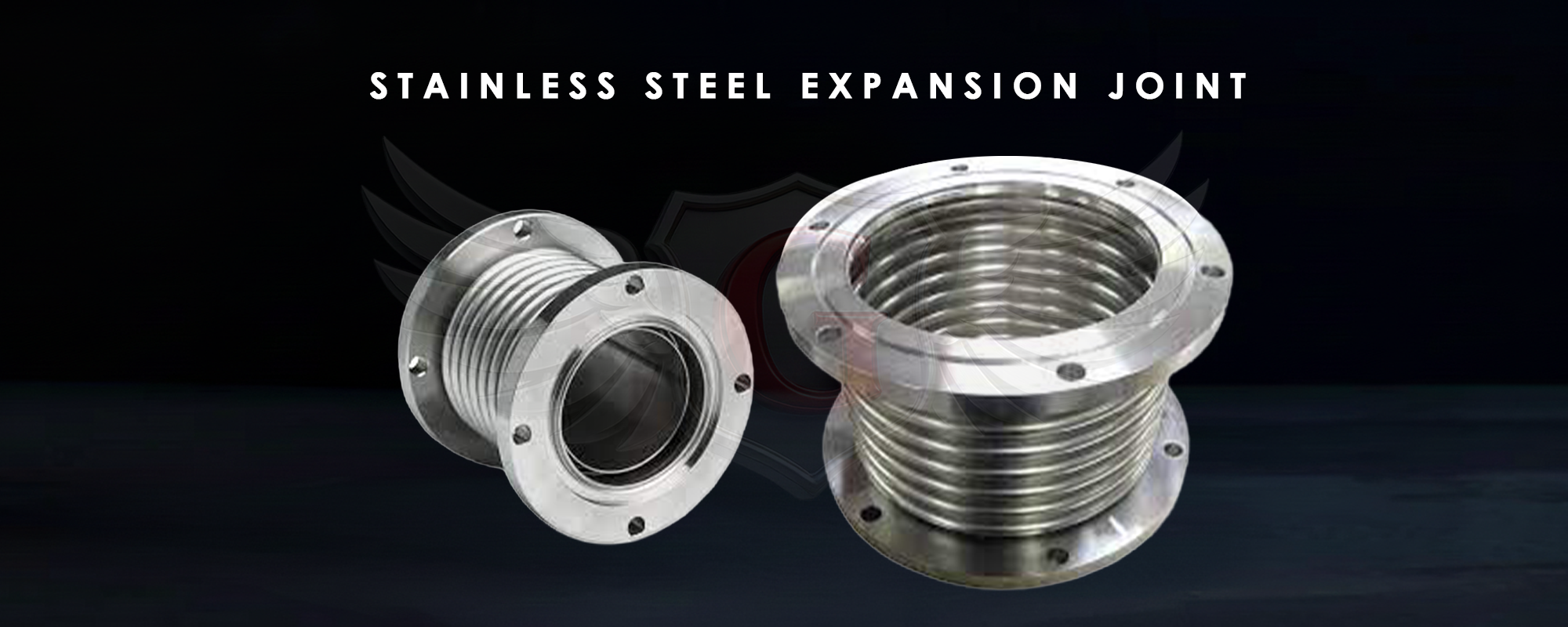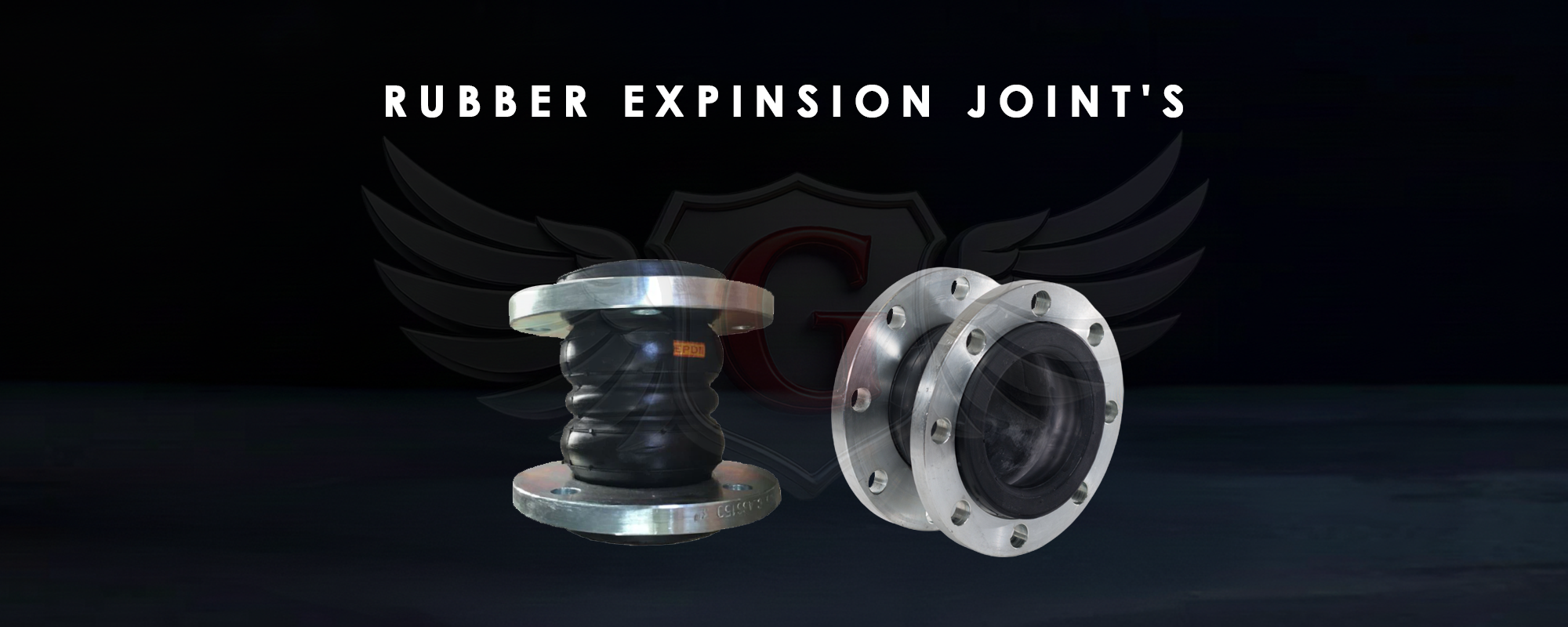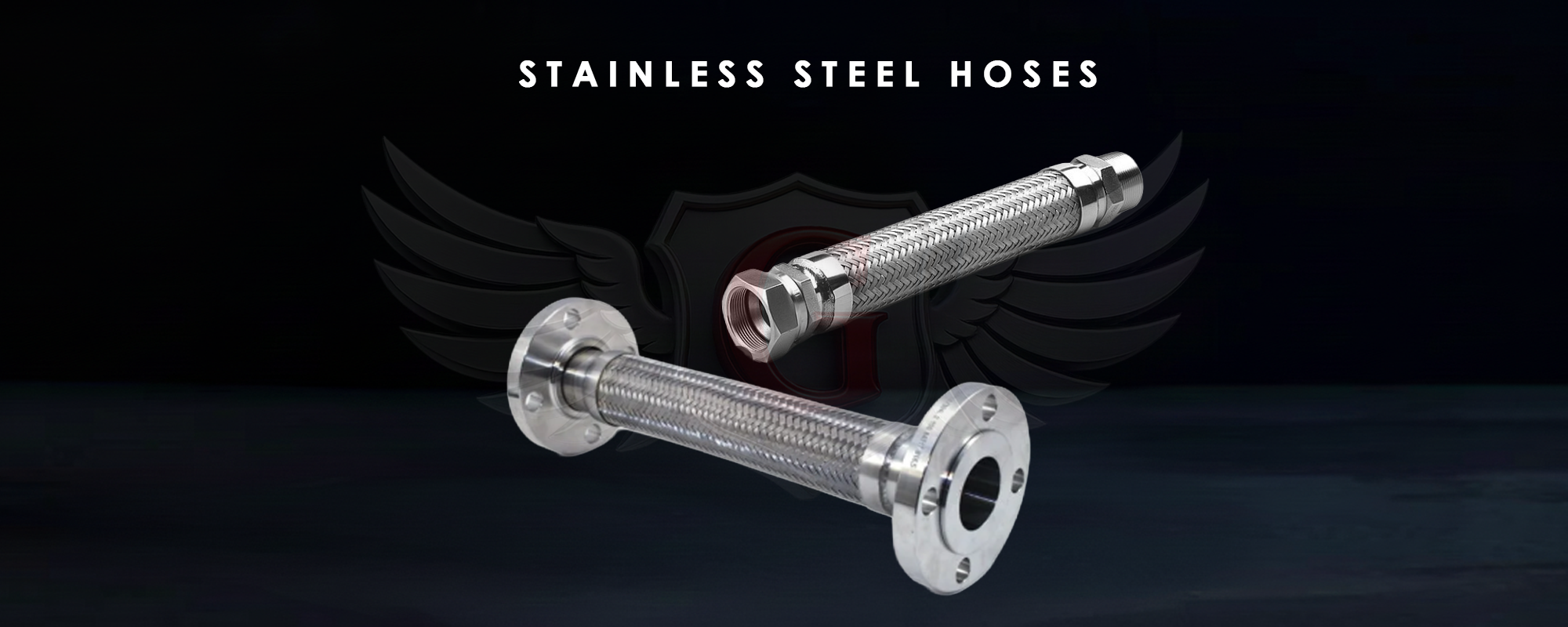


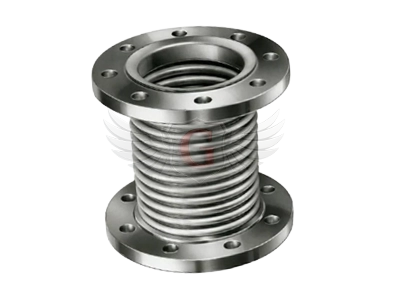
Stainless Steel Expansion Joints (also known as metal bellows) are one of the most important components in a dynamic piping system. They are **not** pipes; they are flexible, precision-engineered devices designed to do one primary job: **absorb movement and relieve stress**.
Piping systems move due to thermal expansion (heat), vibration (from pumps or engines), or other forces. An expansion joint is the flexible element installed in the system to absorb this movement, preventing pipe cracks, flange failure, and damage to connected equipment.
We are specialists. We provide custom-fabricated expansion joints starting from **3 inches (DN80) up to virtually any size required**, including massive 120" (DN3000) joints for power plants and major projects.
Our bellows are fabricated from high-grade Stainless Steel (304L, 316L, and 321 for high-temp) to ensure maximum flexibility and corrosion resistance.
Our team will help you engineer the *right* joint. We analyze your thermal movement, pressure, and vibration to design a solution that is safe and has a long service life.
Every joint is fabricated by certified TIG welders, ensuring perfect, full-penetration welds for flanged or weld-end connections that are 100% leak-proof.
An expansion joint is designed to absorb one or more of these three basic types of movement.
Compression or extension along the center-line of the pipe. This is the most common movement, caused by thermal expansion (growth) or contraction.

Shear or "sideways" movement, where one end of the joint shifts perpendicular to the other. Often caused by pipe misalignment or settling.

Bending or "hinging" movement, where the flanges are deflected to an angle. This is common in complex piping runs.

A joint (often with two bellows) designed to absorb a combination of axial, lateral, and angular movements simultaneously. Used in complex 3-axis systems.
A complete joint is a system of several components, all of which we can customize.
| Component | Options | Purpose & Function |
|---|---|---|
| Bellows (The "Heart") | SS 304, SS 316, SS 321 | The thin, corrugated metal core that provides the flexibility. The material is chosen for temperature and corrosion resistance (321 is best for high temp). |
| End Connections | Flanges (Fixed, Floating), Weld-Ends | How the joint connects to your pipe. We fabricate to any standard (ASME Class 150/300/600, EN PN10/16/40) in Carbon or Stainless Steel. |
| Internal Liner (Sleeve) | Stainless Steel Sleeve | A smooth internal pipe that protects the bellows from flow erosion, reduces friction, and allows for smooth flow. **Highly recommended.** |
| External Cover (Shroud) | Stainless Steel Cover | A solid cover that protects the external bellows from mechanical damage, welding spatter, or falling objects. |
| Tie Rods | Limit Rods, Control Rods | **Critical for safety.** Rods that run parallel to the joint to prevent it from over-extending or over-compressing and to absorb pressure thrust. |
The specifications for every joint are unique to the application. The table below is an *example* of typical dimensions and movement capabilities for a standard Class 150 joint. **We can build any size.**
| NPS (in / mm) | Flange OD (in) | Example Length (in) | Example Axial Movement |
|---|---|---|---|
| 3" (DN80) | 7.5 | 6 - 8 | +/- 1.0" |
| 4" (DN100) | 9.0 | 6 - 8 | +/- 1.0" |
| 6" (DN150) | 11.0 | 8 - 10 | +/- 1.5" |
| 8" (DN200) | 13.5 | 8 - 10 | +/- 1.5" |
| 10" (DN250) | 16.0 | 8 - 12 | +/- 1.5" |
| 12" (DN300) | 19.0 | 10 - 12 | +/- 2.0" |
| 16" (DN400) | 23.5 | 12 - 14 | +/- 2.0" |
| 20" (DN500) | 27.5 | 12 - 14 | +/- 2.0" |
| 24" (DN600) | 32.0 | 12 - 16 | +/- 2.0" |
| 36" (DN900) | 46.0 | 16 - 20 | +/- 2.5" |
| 48" (DN1200) | 59.5 | 16 - 24 | +/- 3.0" |
An expansion joint is a high-thrust, flexible component. Improper installation is the #1 cause of failure and can be catastrophic.
Problem: This is the most common mistake. A joint is designed to absorb *dynamic* movement (like heat). It is **NOT** a tool to connect two pipes that are already misaligned. This will pre-stress the joint and cause it to fail quickly.
Solution: The pipes *on both sides* of the joint must be **solidly anchored** to direct movement *into* the joint. An un-anchored joint will simply stretch out and burst from pressure thrust.
Problem: The bellows are designed to flex, not twist. Twisting the joint during bolt-up (torsion) will instantly damage the thin metal bellows and cause a crack or failure.
Solution: Protect the bellows. Never lift the joint by the bellows. Prevent welding spatter from hitting it. If damage is a risk, order it with an **external cover**.
Metal Joints (SS) are for high pressure, high temperature (e.g., steam, exhaust), and aggressive chemicals. They are less flexible.
Rubber Joints are for lower pressure/temperature (e.g., water, air). They are excellent at absorbing vibration and noise but are not suitable for high heat or chemicals.
This is the force (Pressure x Area) of the fluid trying to push the joint apart. Because the bellows are flexible, this force is not contained by the joint itself—it must be absorbed by the **external pipe anchors**. If the anchors are not strong enough, the joint will fail.
A liner is **highly recommended** for almost all applications. It prevents high-velocity flow or abrasive particles from "eroding" the thin bellows. It also reduces flow turbulence, making the system more efficient. It is a small cost that significantly extends the joint's life.
A piping system failure is not an option. Contact the Glory engineering team today with your size, temperature, pressure, and movement requirements, and we will fabricate a solution built to last.
Request a Quote Now