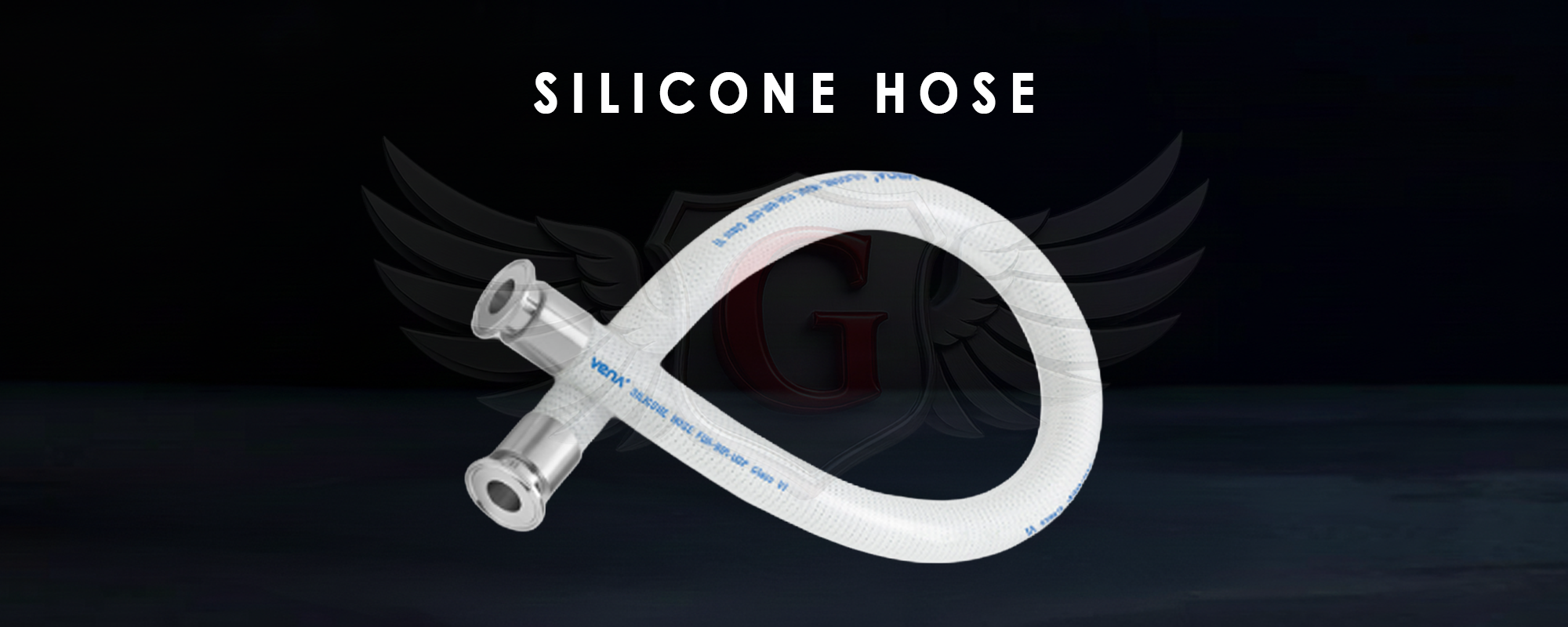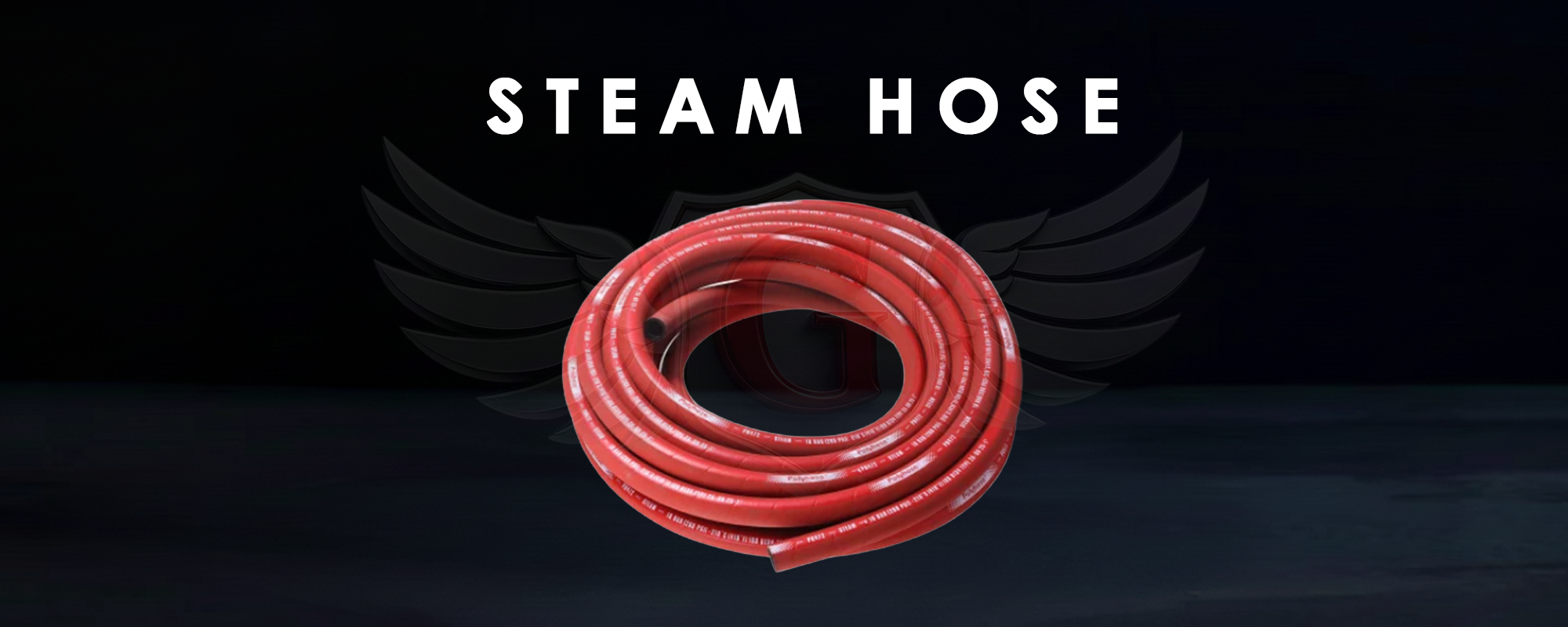


Thermoplastic Hoses are a high-performance alternative to traditional rubber hydraulic hoses. Instead of rubber, they are constructed from engineered polymers (like polyester, polyamide, and polyurethane) and reinforced with high-strength synthetic fibers (like aramid).
This guide from Glory Engineering Supplies serves as a complete technical reference. It is designed for engineers and technicians to understand the key advantages of thermoplastic hose—**light weight, low expansion, and critical non-conductive properties**—and the standards (SAE 100R7 & R8) that define them.
Our hoses meet SAE 100R7 and 100R8 standards, offering working pressures from 2000 to 5000 PSI, making them a direct equivalent to rubber R1 and R2 hoses.
The key safety feature. Our "NC" hoses (often orange) provide electrical insulation, protecting operators of aerial lifts and cherry pickers from power line hazards.
Up to 40% lighter than equivalent rubber hoses, with a smaller outer diameter and better bend radius, reducing operator fatigue and allowing for compact routing.
The smooth, non-aging tube won't contaminate systems, making it ideal for paint spray, chemical, and solvent lines.
These hoses are defined by their pressure rating and reinforcement, as specified by the SAE.
| Hose Standard | Reinforcement | Key Characteristics & Common Use |
|---|---|---|
| SAE 100R7 | Synthetic Fiber Braid |
|
| SAE 100R8 | High-Strength Fiber Braid (e.g., Aramid) |
|
| R7 / R8 Non-Conductive (NC) | Orange, pin-pricked polyurethane cover. |
|
This chart shows the Maximum Working Pressure (MWP) for the two main thermoplastic standards. Note the high-pressure ratings even at small diameters.
| Hose Size (Dash / ID) | SAE 100R7 (Medium Pressure) | SAE 100R8 (High Pressure) |
|---|---|---|
| -02 (1/8") | 3000 PSI | 5000 PSI |
| -03 (3/16") | 3000 PSI | 5000 PSI |
| -04 (1/4") | 3000 PSI | 5000 PSI |
| -06 (3/8") | 2250 PSI | 4000 PSI |
| -08 (1/2") | 2000 PSI | 3500 PSI |
| -12 (3/4") | 1250 PSI | 2000 PSI |
| -16 (1") | 1000 PSI | 2000 PSI |
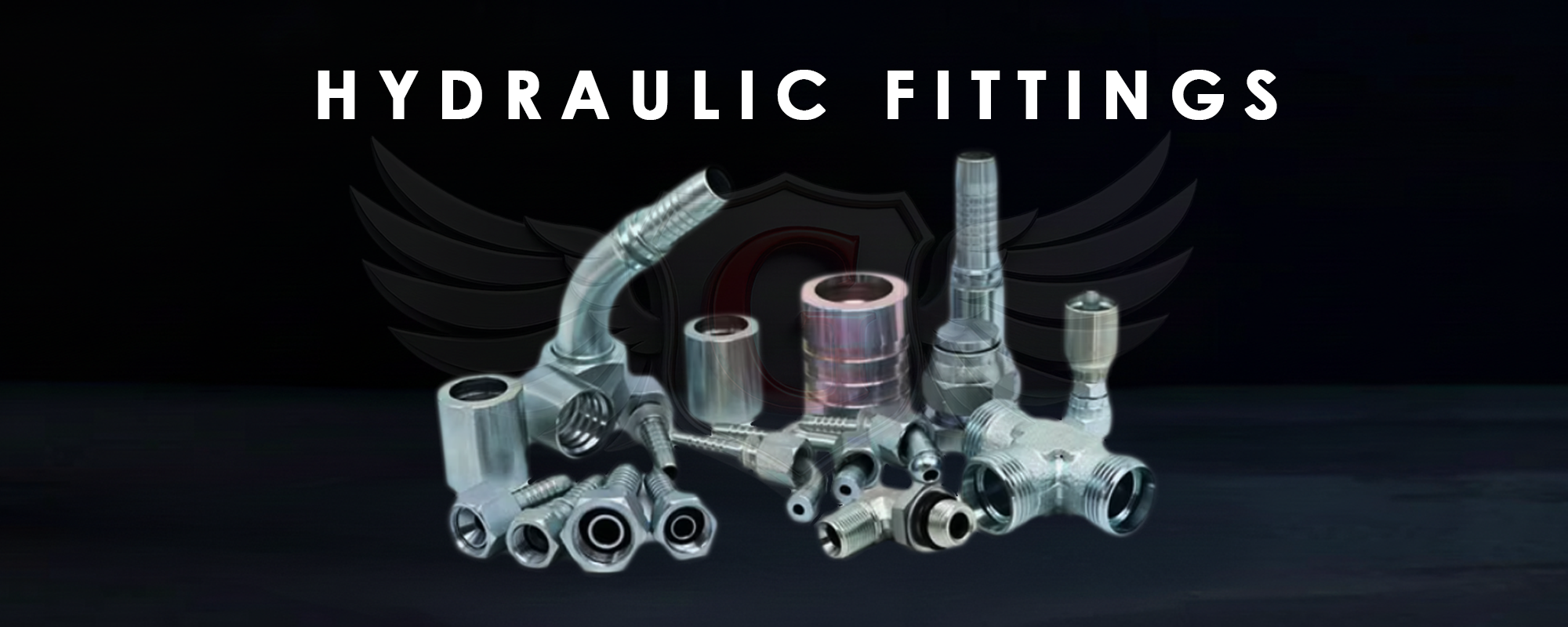
Thermoplastic hoses require their **own specific fittings**. They are NOT interchangeable with rubber hydraulic hose fittings, even if the size and thread are the same.

These hoses use specialized, permanent crimp fittings (ferrules and inserts) designed for the polymer tube and fiber braid.

The connections are standard hydraulic types, such as JIC (37° Flare), NPT, ORFS (O-Ring Face Seal), and BSP.
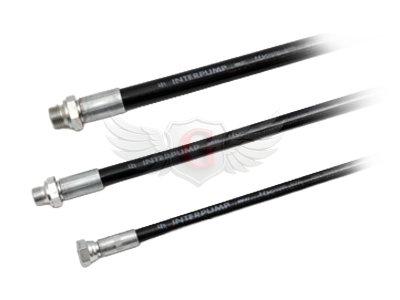
A 1/2" 100R2 (rubber) fitting will NOT work on a 1/2" 100R7 (thermo) hose. Using the wrong fitting will lead to a dangerous blow-off.
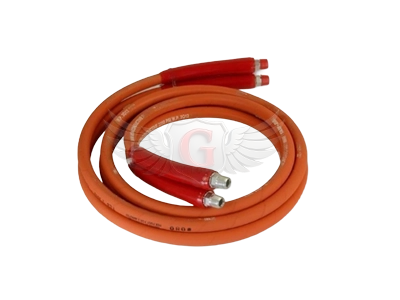
Fittings for "NC" hoses are designed to maintain the electrical isolation of the assembly for maximum operator safety.
While durable, thermoplastic hose must be installed correctly to ensure safety and long life.
Problem: A sharp kink will permanently damage the internal fiber reinforcement, creating a weak spot that will burst under pressure.
This is the #1 cause of failure.
Problem: Using the wrong fittings (e.g., standard 100R2 fittings) will not crimp properly and will lead to a high-pressure blow-off, which can cause severe injury.
Solution: For any application near power lines (aerial lifts), you **MUST** use a hose clearly marked as "Non-Conductive" (NC) to prevent electrical shock.
Solution: The polyurethane cover is tough, but it can be damaged by sharp edges. Use protective sleeves or clamps to prevent the hose from rubbing on equipment.
Thermoplastic is lighter, cleaner (no rubber dust), has a smaller outer diameter, and can be **non-conductive**. Rubber is generally more flexible in extreme cold, more abrasion-resistant, and better for very large (1"+) high-pressure applications.
It's a pressure rating. R7 is the "standard" pressure, often replacing 1-wire rubber hose (100R1). R8 is the "high-pressure" version with stronger reinforcement, often replacing 2-wire rubber hose (100R2).
It is a **critical safety feature** for aerial lift operators. If the lift (or a standard wire-braid rubber hose) touches a power line, it can electrocute the operator. A non-conductive hose insulates the operator from this danger. Standard hydraulic hose is *conductive* because of its wire braid.
No. Thermoplastic hoses require their own specific fittings (inserts and ferrules) and matching crimp dies. The dimensions are different from rubber hose fittings. Using the wrong combination is extremely dangerous and will lead to hose failure.
From critical non-conductive aerial lift lines to lightweight hydraulic systems, our team provides safe, certified assemblies. Contact us to discuss your specific application.
Request a Quote Now