

Hydraulic hoses are the vital arteries of modern machinery, designed to transmit immense hydraulic power (fluid pressure) from a pump to an actuator. Unlike standard hoses, they are engineered to withstand extreme pressures, high temperatures, and harsh operating conditions.
This guide from Glory Engineering Supplies serves as a complete technical reference. It is designed for engineers, technicians, and operators to understand the critical standards (SAE & EN), construction, and pressure ratings to select the correct, safe, and durable hose assembly for any application.
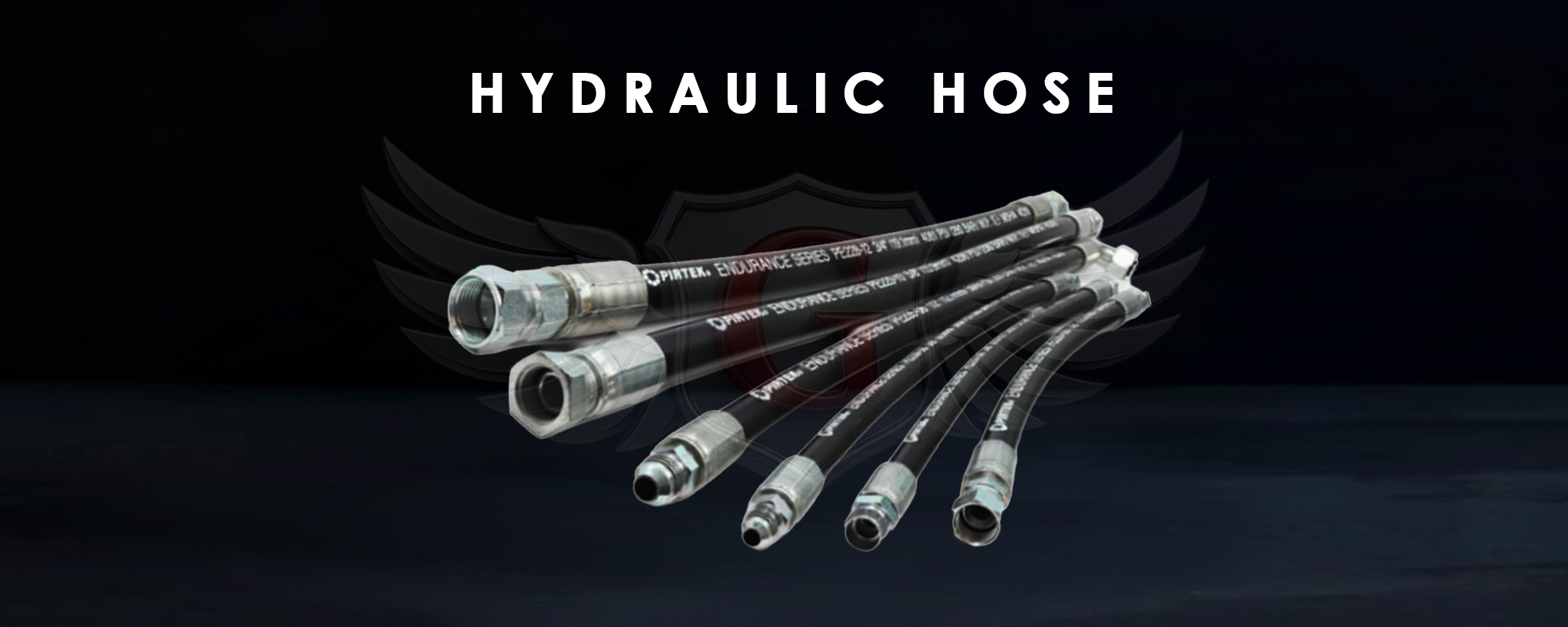
We stock a complete range of hydraulic hoses meeting all major international standards, including SAE (100R1, R2, R16) and EN (1SN, 2SN, 2SC, 4SP).
A hose is only as good as its crimp. Our state-of-the-art workshop provides professional, factory-quality crimping and assembly for all fitting types (JIC, BSP, ORFS, DIN).
Our inventory covers all standard dash sizes, from 1/4" (-04) for pilot lines up to 2" (-32) for high-flow main lines, ready for immediate assembly.
Our engineering team can help you navigate standards, pressure ratings, and fluid compatibility to ensure you get the perfect, safest hose assembly for your machine.
Hydraulic hoses are defined by their construction and pressure rating, as specified by standards from the Society of Automotive Engineers (SAE) and the European Norm (EN).
| Standard (SAE / EN) | Reinforcement | Key Characteristics & Common Use |
|---|---|---|
| SAE 100R1AT / EN 853 1SN | One (1) high-tensile steel wire braid. |
|
| SAE 100R2AT / EN 853 2SN | Two (2) high-tensile steel wire braids. |
|
| SAE 100R16 / EN 857 2SC | Two (2) high-tensile steel wire braids (Compact). |
|
| EN 856 4SP / 4SH | Four (4) or Six (6) spiral layers of high-tensile steel wire. |
|
This chart shows the Maximum Working Pressure (MWP) for the most common hose standards. Note how pressure rating decreases as hose diameter increases.
Dash Size (-04, -06, etc.): A hydraulic industry standard representing the hose ID in 1/16th of an inch. (e.g., -08 = 8/16" = 1/2").
| Hose Size (Dash / ID) | 1SN / R1AT (1-Wire) | 2SN / R2AT (2-Wire) | 2SC / R16 (2-Wire Compact) | 4SP (4-Wire Spiral) |
|---|---|---|---|---|
| -04 (1/4") | 3260 PSI | 5800 PSI | 5800 PSI | 6525 PSI |
| -06 (3/8") | 2610 PSI | 4785 PSI | 4785 PSI | 5800 PSI |
| -08 (1/2") | 2320 PSI | 4000 PSI | 4000 PSI | 5075 PSI |
| -10 (5/8") | 1885 PSI | 3625 PSI | 3625 PSI | 4500 PSI |
| -12 (3/4") | 1520 PSI | 3120 PSI | 3120 PSI | 3625 PSI |
| -16 (1") | 1230 PSI | 2400 PSI | 2400 PSI | 3120 PSI |
| -20 (1 1/4") | 915 PSI | 1810 PSI | 1810 PSI | 2610 PSI |
| -24 (1 1/2") | 725 PSI | 1450 PSI | 1450 PSI | 2030 PSI |
| -32 (2") | 580 PSI | 1160 PSI | 1160 PSI | 1600 PSI |
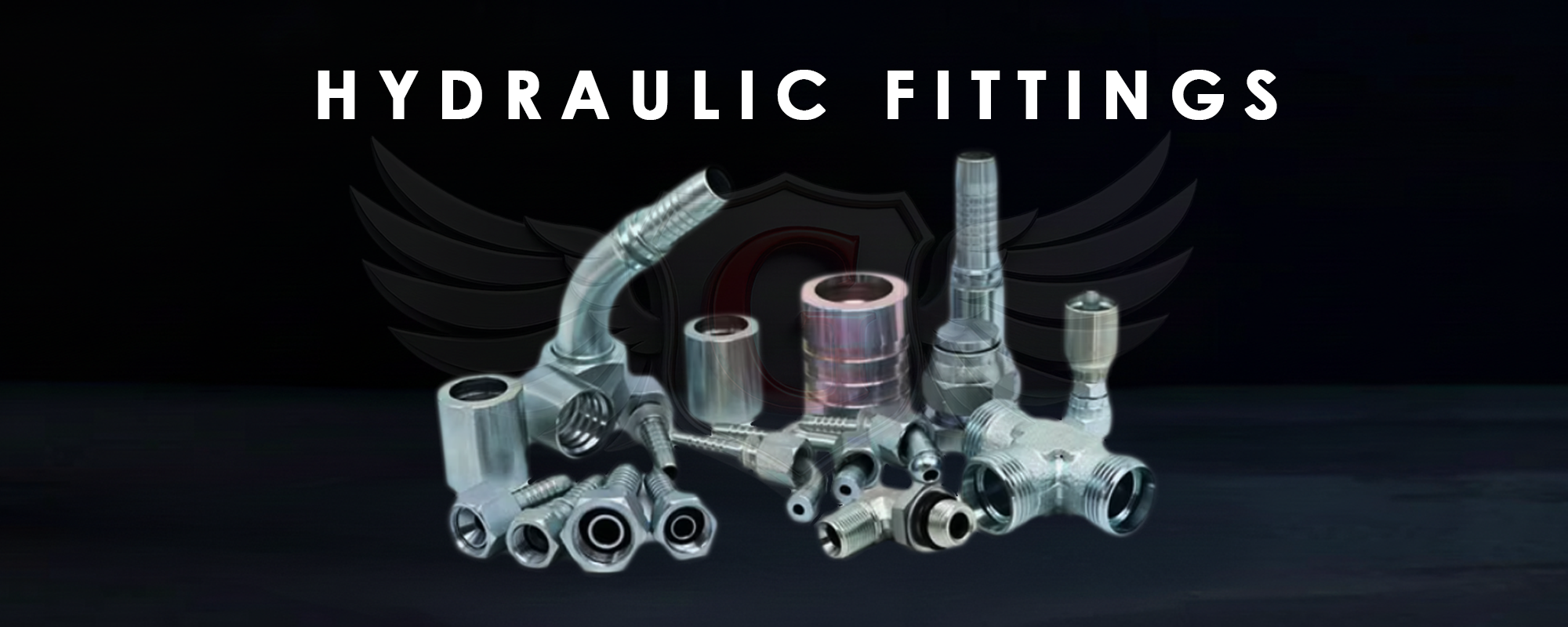
A hydraulic hose is useless without its fittings. The assembly is crimped together to create a permanent, leak-proof seal. Choosing the correct fitting thread is critical for connection.

Very common (American standard). Seals on a 37-degree metal-to-metal flare. (SAE J514)

British Standard Pipe. Very common in Europe and globally. Seals on a 60-degree metal-to-metal cone.

Excellent, high-pressure, vibration-resistant seal. Uses a soft O-ring in the fitting face. (SAE J1453)

National Pipe Taper. An older, common standard. Seals on the threads themselves (requires sealant).
Proper installation is the #1 factor in extending hose life. Most failures are caused by improper routing that creates excess stress, leading to braid fracture or core fatigue.
Problem: Twisting the hose during installation (like tightening a screw) puts constant torsional stress on the wire braid, causing it to fatigue and snap quickly.
This is the fastest way to destroy a hose.
Solution: Always ensure the hose bends in only one plane. Use two wrenches—one to hold the fitting steady, and one to tighten the connection.
Problem: Bending the hose tighter than its "Minimum Bend Radius" (especially near the fitting) over-stresses the braid and can cause the hose to fail.
Solution: Always provide a smooth, gentle curve. Use 90-degree elbows or a longer hose to make the turn without stressing the hose itself. Leave a straight section after the fitting.
Problem: A hose that is stretched tight has no room to absorb pressure changes (which can cause it to shrink in length) or movement, leading to fitting pull-out.
Solution: Always install the hose with a small amount of "slack" (extra length) to allow for pressure surges, thermal expansion, and machine vibration.
The number indicates the wire braid layers. 1SN has **one** layer of steel wire braid and is used for medium pressure. 2SN has **two** layers of steel wire braid and is used for high pressure. It is visibly thicker and less flexible, but significantly stronger.
Braided hose (like 1SN, 2SN) has wire layers that are criss-crossed, offering excellent flexibility. Spiral hose (like 4SP, 4SH) has wire layers that are spiraled in parallel. This construction is less flexible but vastly superior for handling extremely high pressures and, most importantly, high-impulse (shock-loading) applications.
It's the industry standard for hydraulic hose sizing. The number represents the Inner Diameter (ID) of the hose in **1/16ths of an inch**. For example:
Unlike other hoses, hydraulic hoses require a high-pressure **crimping machine** to permanently attach the fittings. A failed crimp can be extremely dangerous. We strongly recommend having all assemblies made and tested by a professional, like the service offered at Glory Engineering Supplies.
From a single replacement hose to a complete kit for your machinery, the Glory team is ready to help. Contact us with your standard, size, and fitting requirements for an immediate quote.
Request a Quote Now