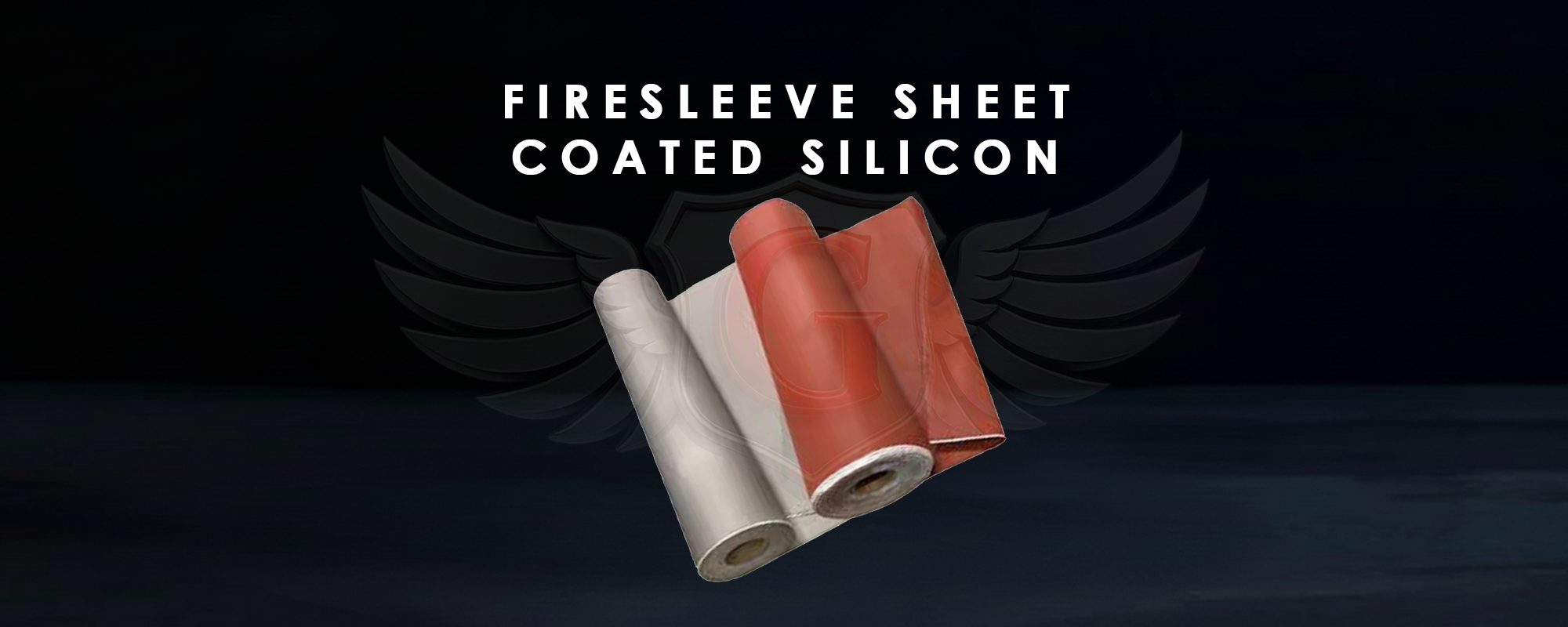


Silicone Coated Fiberglass Sheet (or "Sheet Coated Silicon") is a high-performance, composite thermal fabric. It is **not** a sleeve or a tube, but a flat, flexible textile designed for fabricating custom heat shields, welding blankets, and removable insulation jackets.
It is constructed from a base layer of woven **white fiberglass** (for high-temperature insulation) and coated on one or both sides with a layer of **red iron-oxide silicone rubber**. This guide from Glory Engineering Supplies covers the technical specifications and available thicknesses **from 0.5mm up to 4mm**.
We stock all thicknesses, from thin 0.5mm sheets for light spatter to heavy-duty 4mm sheets for extreme heat and molten splash.
The red silicone coating is self-extinguishing and sheds molten metal splash (up to 1650°C), preventing it from burning through.
The fabric is strong, flexible, and easy to cut and sew, making it the perfect material for fabricating custom-fit insulation solutions.
The silicone coating provides a waterproof barrier that resists hydraulic fluids, oils, and chemicals, protecting the fiberglass insulation inside.
The sheet's performance comes from its composite layers.
| Component / Type | Material | Function |
|---|---|---|
| Base Fabric | E-Glass Fiberglass |
|
| Coating | Iron-Oxide Red Silicone Rubber |
|
| One-Side Coated | Silicone (Red) / Fiberglass (White) |
|
| Two-Side Coated | Silicone (Red) on Both Sides |
|
This product is a non-pressure-rated fabric. Its key metrics are temperature, thickness, and weight (grams per square meter).
| Nominal Thickness | Approx. Weight (g/m²) | Continuous Temp | Molten Splash Temp |
|---|---|---|---|
| 0.5 mm | ~ 500 | 260°C / 500°F | 1650°C / 3000°F |
| 1.0 mm | ~ 850 | 260°C / 500°F | 1650°C / 3000°F |
| 1.5 mm | ~ 1200 | 260°C / 500°F | 1650°C / 3000°F |
| 2.0 mm | ~ 1700 | 260°C / 500°F | 1650°C / 3000°F |
| 3.0 mm | ~ 2500 | 260°C / 500°F | 1650°C / 3000°F |
| 4.0 mm | ~ 3400 | 260°C / 500°F | 1650°C / 3000°F |
This fabric is designed to be easily cut and fabricated into custom shapes.
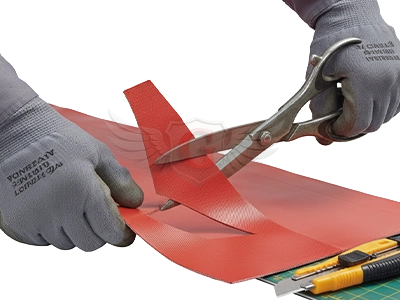
Easily cut to any shape using heavy-duty industrial shears or a utility knife. Always wear gloves to protect from fiberglass.

The material can be sewn to create jackets and covers. You must use a high-temperature thread, such as Kevlar or Stainless Steel.

Easily attach fasteners like high-temp Velcro, snaps, or lacing hooks (D-rings) to create removable insulation jackets.

Exposed cut edges can be sealed with silicone fire tape or a bead of high-temperature RTV silicone sealant to prevent fraying.
Follow these best practices to ensure maximum safety and performance.
Solution: When using a one-sided sheet, the **red silicone side** must face the source of heat, flame, or molten splash. The white fiberglass side is the insulator, not the shield.
Problem: This material is a shield, not a furnace liner. It is designed to shed *intermittent* splash and flame. Constant, direct contact with a 1650°C source will eventually degrade it.
Solution: When creating a curtain or blanket, always overlap seams by at least 1-2 inches (25-50mm) to prevent heat, sparks, or spatter from passing through the gap.
Solution: When cutting or handling, the fiberglass base can cause skin irritation. Always wear gloves, safety glasses, and long sleeves when fabricating.
They are made of the same materials, but in different forms for different jobs:
A plain white fiberglass sheet is only an insulator (like the "Braided Fiberglass Sleeve"). It is **absorbent** and will soak up oil or water. The **silicone coating** makes this sheet waterproof, oil-resistant, and (most importantly) able to **shed molten metal splash**. A plain fiberglass sheet would be destroyed by molten splash.
It depends on the hazard:
Yes. It is a flexible fabric, not a rigid board. It can be easily draped, folded, and sewn. Thinner versions (0.5mm) are very flexible, while thicker versions (4mm) are heavier and stiffer, but still flexible enough to wrap around a large pipe or valve.
From fabricating a custom valve jacket to outfitting your welding bay, we have the right thickness of silicone-coated sheet in stock. Contact the Glory team for a quote.
Request a Quote Now